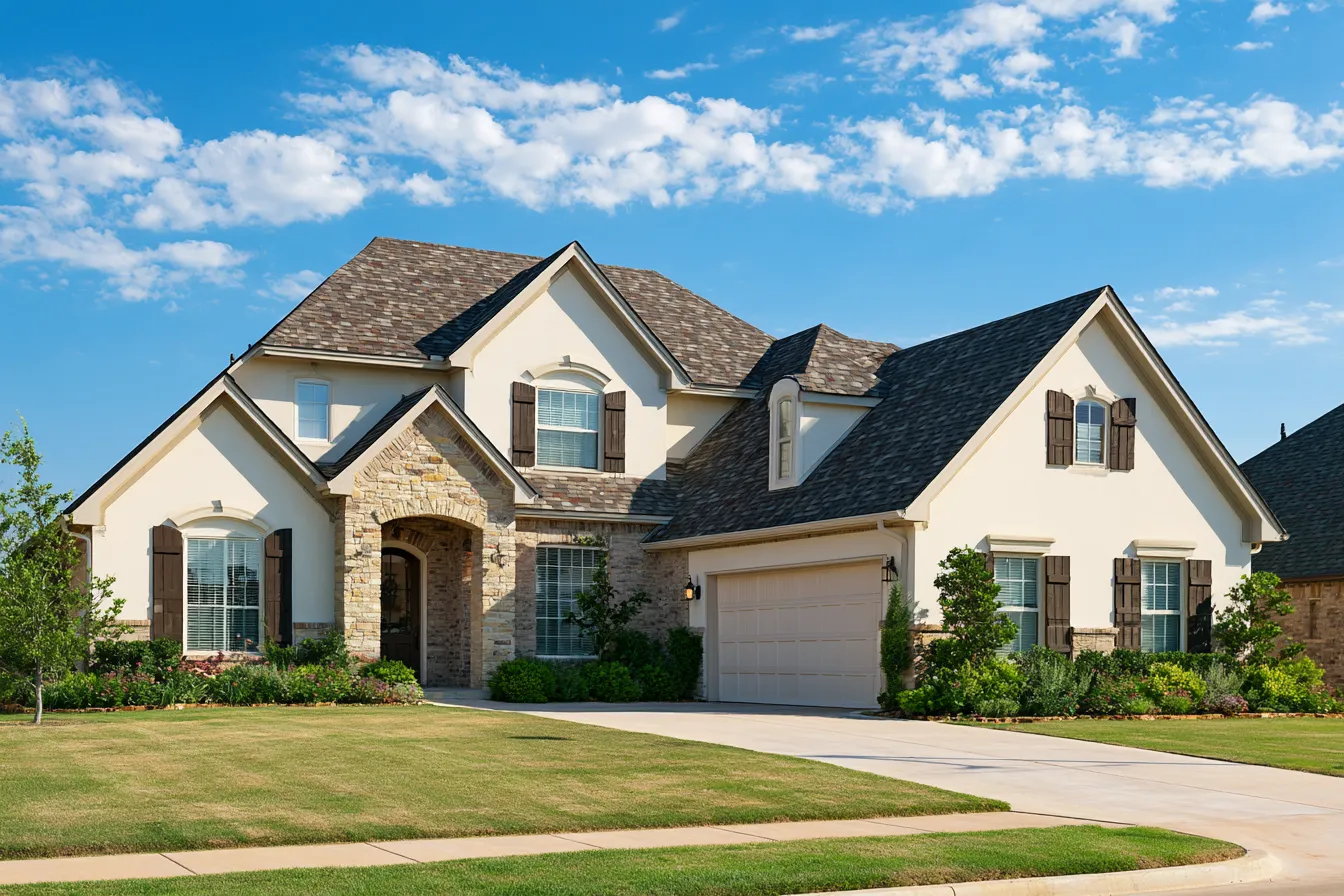
Roof shingles in University Park, TX are usually chosen once and then forgotten until something goes wrong. What surprises owners is how far apart two identical roofs can end up — same year, same product, same street, and one has years left while the other doesn't.
The shingle is rarely the variable
When two roofs of the same age are in different condition, the covering usually isn't the reason. Architectural asphalt is a manufactured product with a narrow quality band, and the same bundle goes onto both houses. What differs is everything underneath and around it.
The point is worth saying plainly, because the first instinct after a bad inspection is to blame the material, and the second is to buy a more expensive one. Neither is usually the fix. A better shingle laid over the same unresolved conditions arrives at the same place, a few years later.
Which way the slope faces
A south and west facing slope takes the longest, hottest exposure of the day, every day, for the life of the roof. Granule loss shows there first, and the mat underneath goes brittle there first. On the same house, a north facing slope of identical age can still look close to new.
So a roof is judged plane by plane rather than as one number. A replacement decision that treats all eight planes as a single average will either retire good material early or leave a failing slope in service.
What the attic is doing underneath
A roof deck that can't move air cooks the covering from below. The shingle ages on both faces at once, and it does it quietly, because nothing about it is visible from the street or the yard.
Intake and exhaust are supposed to be balanced against each other, and on a house that's been re-roofed once or twice they often aren't — a previous job added exhaust without adding intake, or insulation was blown in over the intake vents and nobody looked afterwards. Where the evidence points inside, the attic side is worth reading before anyone prices a covering.
Which storms actually crossed that address
Hail doesn't fall evenly across a city. The county record runs to 27 hail days between 2023 and 2026, but a storm cell crosses a few streets at a time, so two roofs a block apart can carry entirely different histories out of the same four years.
That's the honest limit of any published figure, including the ones University Park Roofing Experts publishes: the county record tells you what the region has been getting, and only the roof itself tells you what your address caught. Storm damage is read on the slope, not inferred from a map.
If your roof is at the age where the answer matters, an address is enough to start. A local roofer reads it plane by plane and writes down what's there, and if it turns out to have years left, that's what the report will say.
Contact us