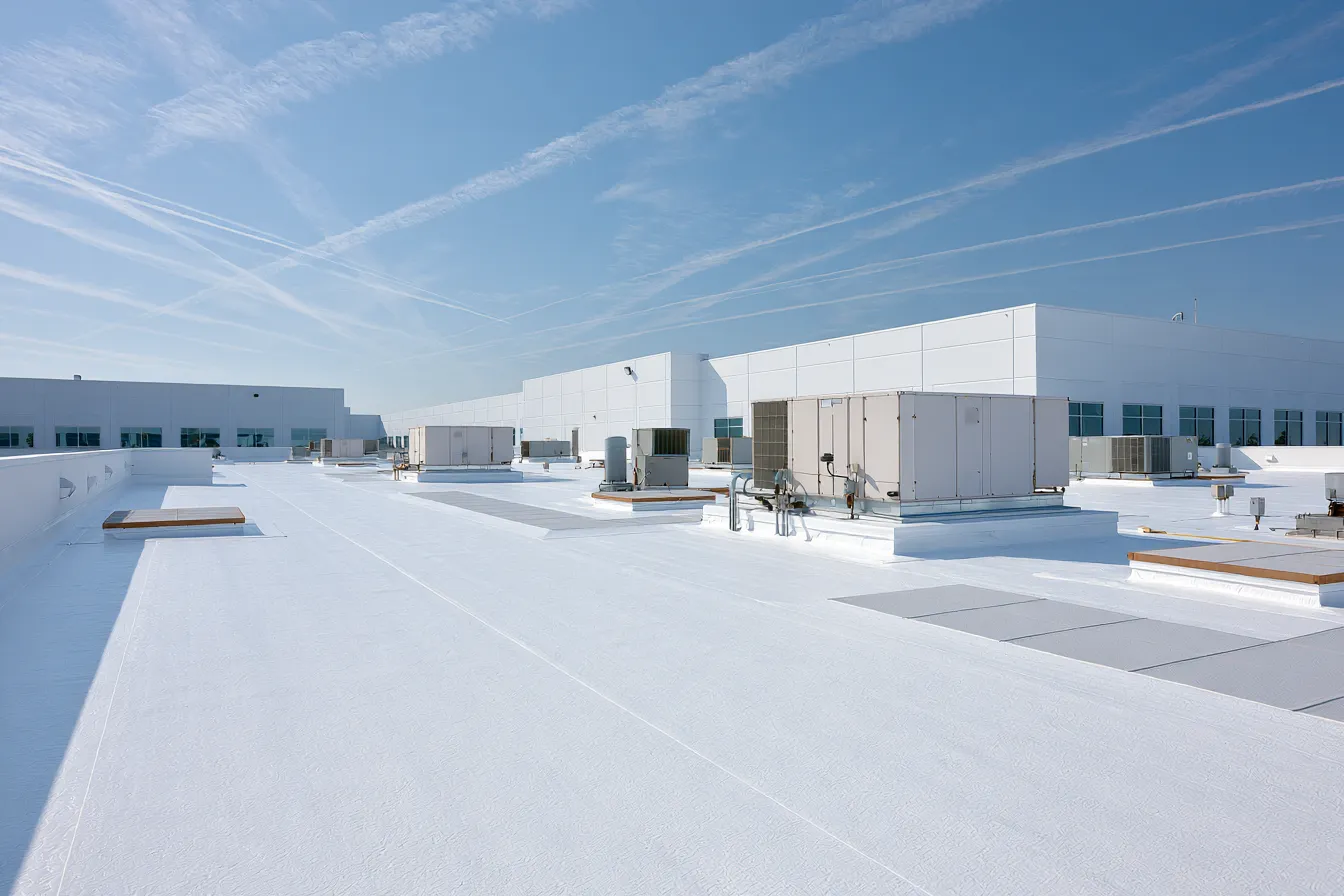
Commercial Roofing in University Park, TX
Commercial roofing in University Park, TX is mostly a drainage question. A low-slope roof does not shed water, it moves it, and the trouble starts wherever it stops moving.
Drainage decides everything else
A pitched roof gets rid of water by being steep. A low-slope roof has to carry it to a drain instead, and every seam, lap, curb and penetration between the rain and that drain is somewhere the system can be beaten. Most commercial roof trouble is not a hole, it is a detail that stopped draining.
A survey on a low-slope roof therefore looks for different things. Ponding that is still sitting there two days after rain, seams that have lifted, flashings at parapets and curbs, and whatever has been added to the roof since it was built. Rooftop equipment is a common culprit, because the units get serviced by people whose job is the unit rather than the membrane under it.
The systems below are the ones that get worked on. Which of them suits a given roof depends on the deck, the slope built into it, what is already up there, and how much disruption the building can absorb while the work happens.
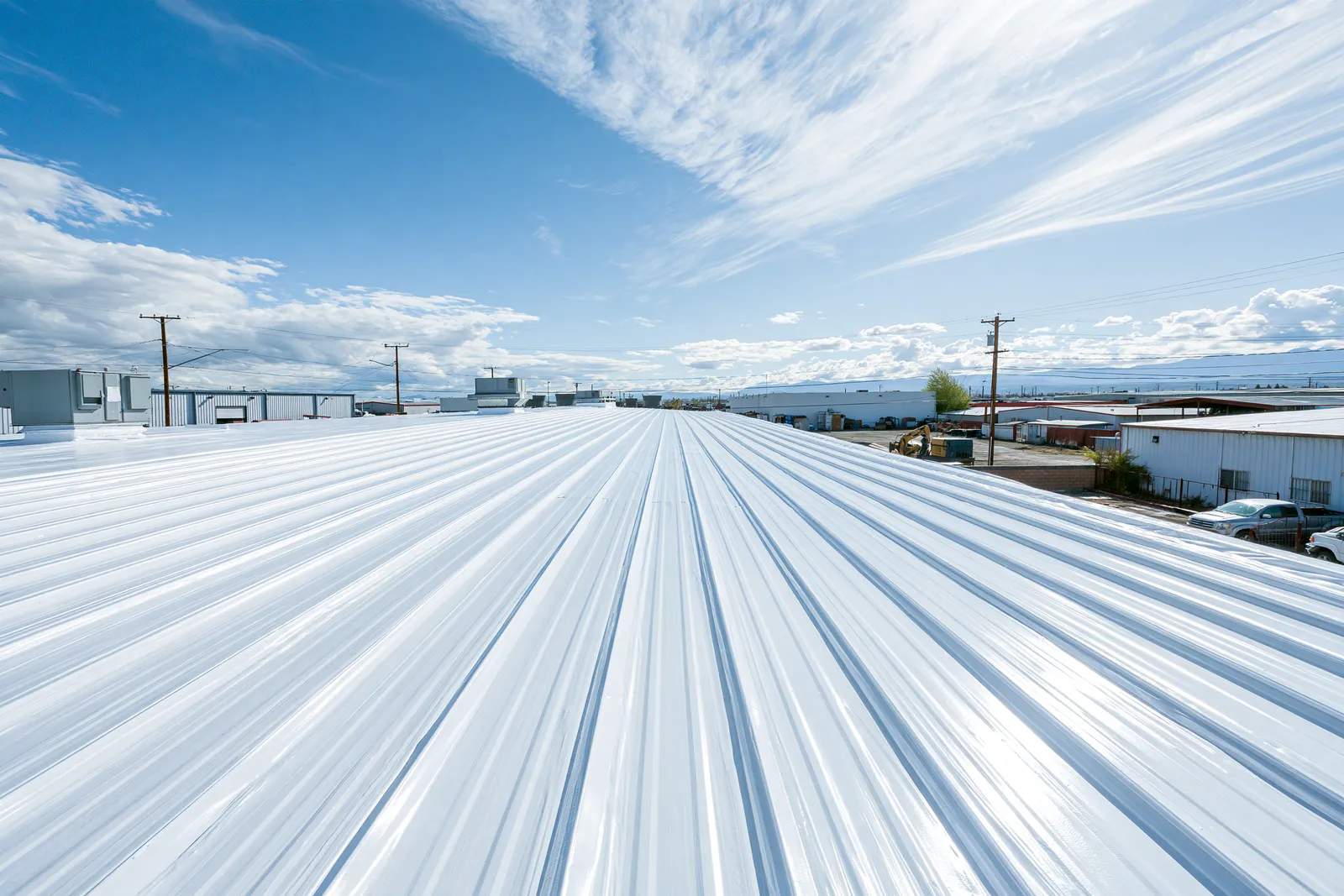
Low-slope work on University Park buildings
Not every low-slope roof needs the same answer, and the honest one is often not a replacement. Each item below is a real option on the right roof and a waste of money on the wrong one.
- 01Leak Tracing
- Water travels under a membrane before it appears inside, so the stain and the breach are rarely in the same place.
- 02Seams, Laps And Flashings
- The joints and the edges fail long before the field does, and most of them can be repaired in place.
- 03Ponding And Drainage
- Water still standing two days after rain is either a fall problem or a debris problem, and the fix depends on which.
- 04Coatings And Restoration
- A sound deck under a tired membrane can often be recoated, which buys years without a tear-off.
- 05Full System Replacement
- TPO, EPDM, modified bitumen or built-up, chosen against the deck and what the building can carry.

From a description to a scope
Order matters more on a flat roof than on a pitched one, because work priced before the roof is walked is priced off a floor plan. Nothing here is priced from the parking lot.
You describe the building
Roof type and age if you know them, what is mounted on top, and where water has shown up inside. Anything you do not know is fine to leave out.
A roofer walks the whole roof
Drains, seams, laps, curbs, parapets and the penetrations, photographed as found. Ponding gets checked against how long it has been since the last rain.
You get the findings and the options
What was seen and where, with the pictures attached, then repair, recoat or replace with what each one buys in years. Written so a budget can be built from it.
Commercial roof questions before a University Park survey
Q1How do I know if the roof is ponding or just wet?
Q2Can a flat roof be repaired, or is it always a replacement?
Q3Does the building have to close while the work happens?
Q4What is worth knowing before somebody comes out?
Say what sits on the roof and where water stands
Two facts point a survey at the right part of the roof: what is mounted up there, and where rain sits longest afterwards. Send those and you get an honest read on whether the roof needs work now or watching for another year. Commercial decisions move on your own timetable, and nothing here shortens it.