
Roof Repair in University Park, TX
Most repair calls open with something somebody else said: the whole roof has to come off. Roof repair in University Park, TX starts a step earlier, at the few inches where water is crossing.
If it is actively running, say so at the top and name the room.
Why a University Park leak is usually a detail
Older roofs in this town rarely fail across the middle of a slope. They fail at the interruptions: step flashing where a roof meets a wall, the metal in a valley, the courses beside a chimney, the rubber collar around a vent stack. Those parts are thinner, older in service terms, and doing harder work than the shingles around them.
The line between repairing and replacing therefore sits in a different place here than it does on newer housing. A covering can be well into its second decade and still be sound enough to carry a rebuilt valley for years, which means a repair is often the correct answer on a roof somebody has already been told to replace. The reverse matters just as much: where the field has gone brittle, new metal set into it works against material that can no longer hold it.
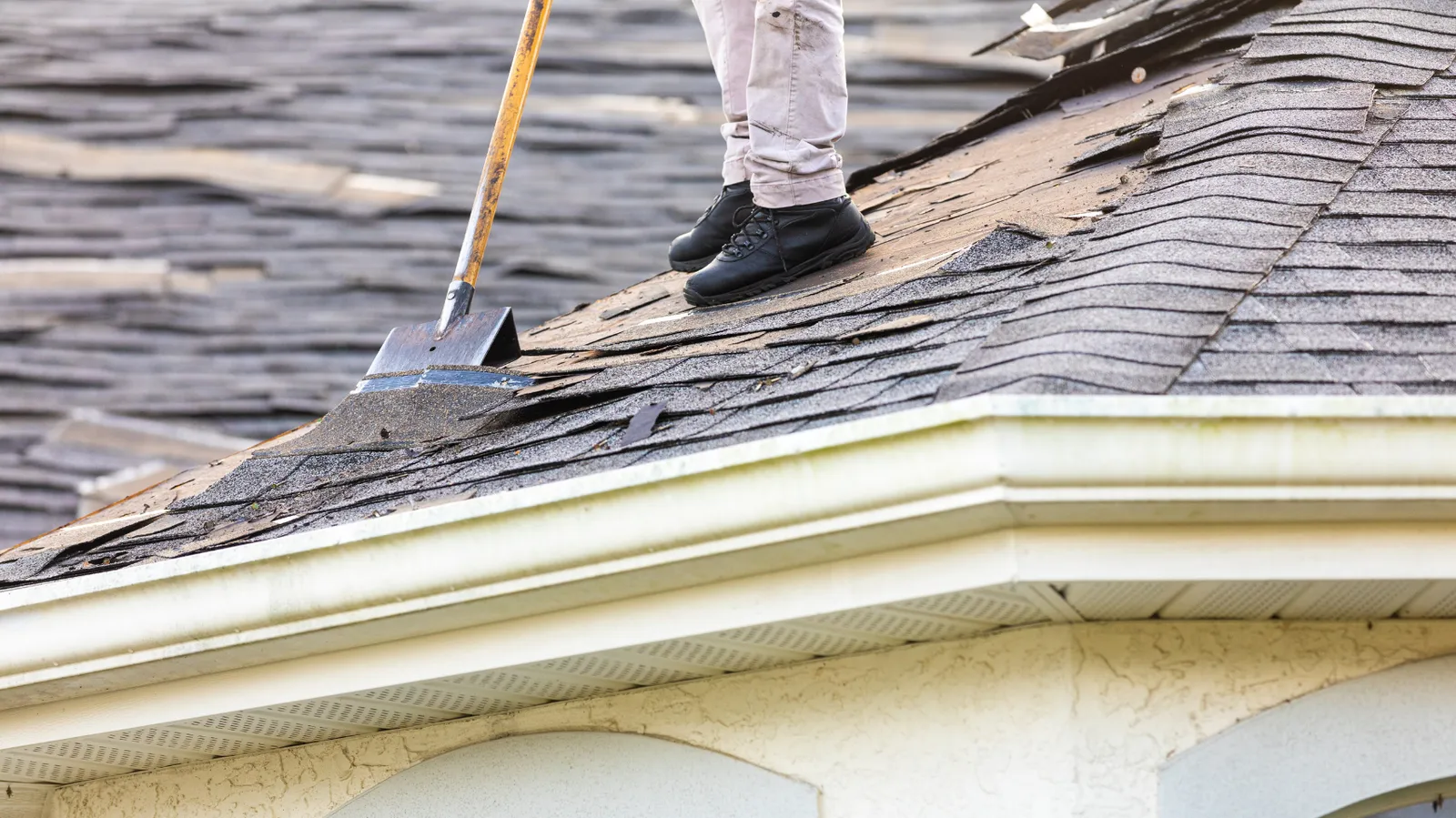
Where a University Park repair stops and replacement starts
A repair is worth doing while the covering around the failure still has service left in it, and how much is left changes from one roof to the next. The four findings below are what a roofer sorts between, running from the one that plainly belongs to a repair to the one that plainly does not.
- 01One Detail, Sound Field
- A single flashing, valley or penetration has failed on a covering that still sheds well everywhere else. Rebuild the detail in new metal and the roof goes back to being a roof. This is the most common finding on an older house here, and the one most often quoted as a replacement.
- 02The Same Plane, A Third Time
- Where one area has been patched twice and has opened again, the repairs are not failing because they were done badly. Something above or beneath them is moving, and until that is found the next patch buys the same few months the last one did.
- 03Worn Field, Working Details
- A slope that has lost most of its granule cover will not take a new piece well, and matching into it is guesswork. Work here is a holding action with a stated end, which is a reasonable thing to buy when a decision has to wait and a poor thing to buy by accident.
- 04Wet Boards Under The Entry
- Once the decking beneath a failure has stayed damp through a season, the job stops being a repair and becomes a small replacement of that section. The scope changes at the moment the covering comes up, so the possibility belongs on the estimate beforehand.
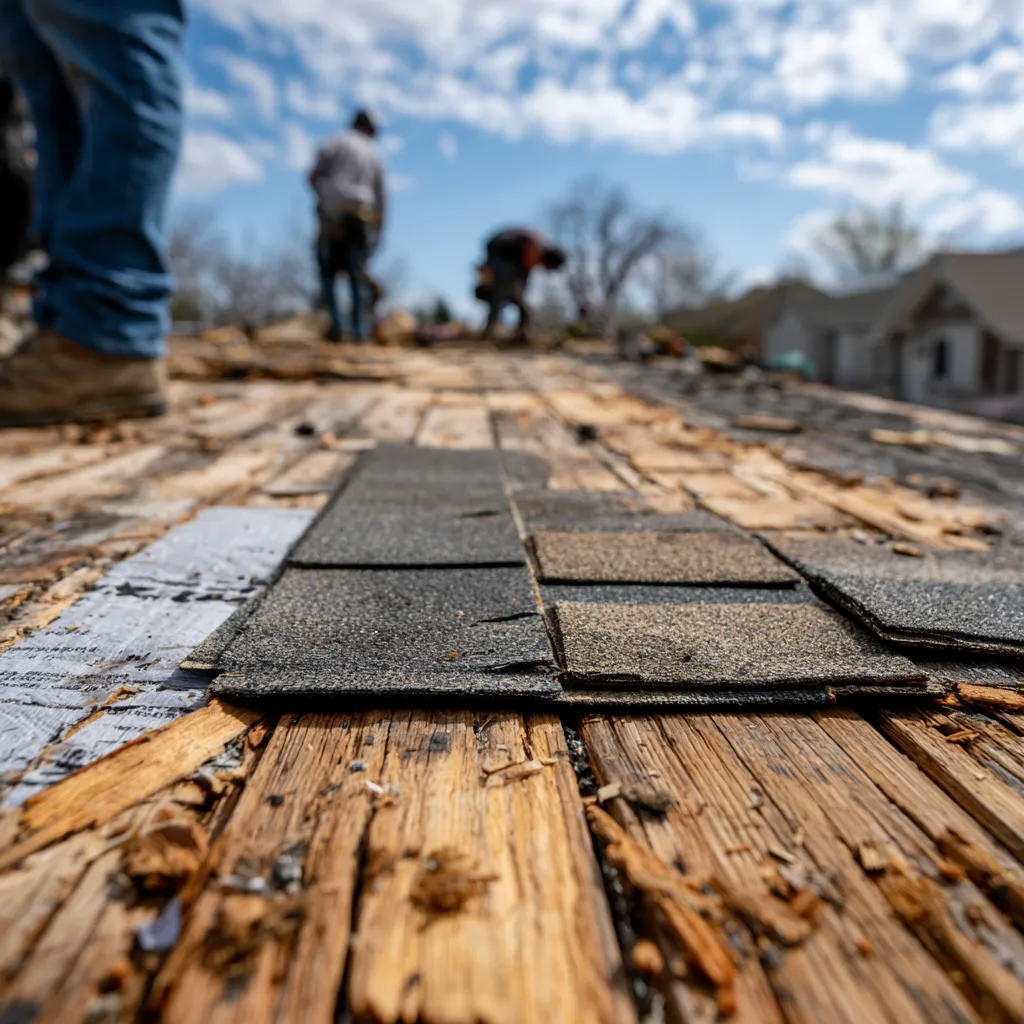
None of these four gets decided from the ground or from a photograph. Where the line falls is settled with the detail open and the boards visible.
From the stain to the entry point
A repair runs backwards, from the mark you can see to the place where water actually crosses the roof. Each step below narrows the search, and nothing is priced until the last one is finished.
What you can point at
The room, the ceiling or the wall it runs down, when it first appeared, and whether it shows only when the wind comes from one side. A leak that needs wind behind it lives on a vertical surface, and that alone narrows the search to one elevation before a ladder goes up.
The roof gets read above the mark
Water lands, travels along the deck or a rafter, and falls off somewhere else, so the search begins uphill of the stain and works through the details in between. Where the attic can be entered, the underside of the boards holds the track long after the surface has dried.
The finding comes before the number
What the repair covers, what it leaves alone, and what the covering around it will hold. A price follows that reading; it does not arrive alongside it, because the two variables most able to move it sit under the shingles.
Signs the leak is not where the stain is
A ceiling stain marks the place water fell off something, not the place it came through. The readings below are what separate the two, and each one points at a different part of the roof.
- A stain that grows only in driven rain: water that needs wind behind it is entering at something vertical, which puts a wall junction, a chimney side or a dormer cheek somewhere above it.
- A mark two rooms from the nearest penetration: water follows whichever rafter it lands on until something interrupts it, so the distance between the entry and the stain is often the length of a bay or more.
- A wet patch in the attic with a dry ceiling below it: insulation carries the evidence for a season before anything reaches the room, and the wet area sits under the entry, which is usually some distance from the eventual stain.
- A leak dated to work on something other than the roof: a new vent, a satellite bracket, repointed chimney courses and a gutter replacement all open the roof, and the failure usually starts the week the other trade left.
- Water showing at an interior wall instead of a ceiling: runoff inside a wall cavity has generally come through step flashing at a sidewall, the detail hardest to see from anywhere and the one most often sealed over instead of rebuilt.
- A stain that returns in the same outline every time: a repeating edge means a fixed path, typically a joint that opens as the roof warms and closes again overnight.
Each of these narrows where to look, and none of them settles it. An entry point is confirmed by finding it, never by inferring it.
What decides the price of a small University Park job
A repair is priced on how hard the failure is to reach and how much of the roof has to come apart to rebuild it properly. Two spots that look the same size from the driveway can be hours apart once pitch, height and the material around them are counted.
The item most likely to move a repair price after it is written is what the boards under the failure turn out to be. A repair estimate that names a rate for that in advance is a finished document; one that does not will produce the same number later, with less warning.
Describe the repair- How far up and how steep the reach is, and what has to be staged to work safely
- Whether one detail failed, or several that share a single cause
- How new material has to meet a covering that has weathered for years
- What the deck under the entry point turns out to be once it is open
Why older University Park roofs give way at the details
The parts of a roof that give way first are the parts that are not roof: metal, sealant, rubber and mortar. On a covering up for decades those have taken more heat cycles than anything else on the house. Dallas County hail finishes what that aging starts, hardest where the roof changes direction.
- 01Sealant Runs A Shorter Clock Than Shingles
- Mastic and caulk at a counter flashing last a handful of years; the covering they sit against is sold in decades.
- 02Mortar Moves, And Metal Cannot Answer For It
- Chimney joints open with age and take water in above where flashing can stop it. The repair is then two trades.
- 03A Valley Drains Two Slopes Through One Line
- Two planes drain through one run of metal, so a valley wears several times faster than the field beside it.
- 04Collars Harden On Their Own Schedule
- Rubber around a vent stack hardens and splits regardless of how the shingles are faring. One three-inch circle can leak.
None of this is age by itself. The same year on a simpler house carries half the details.
Leak and repair questions on an older University Park roof
These arrive in roughly the same order on every call, and most of them are one question wearing different clothes: where does the line fall. Each answer below says what settles the question.
Q1I have been told the whole roof needs to go. How would I know a repair would hold?
Q2Does a repair need a permit in University Park?
Q3Will a repair match the rest of the roof?
Q4The leak stopped on its own. Is it fixed?
Q5How long should a repair last?
Q6Is it worth repairing a roof we are about to sell?
Point us at the spot and what it does in rain
A room, a wall, and what the leak does in rain is enough to start, and a local roofer works uphill from there until the entry is found. A finding that points to replacement rather than repair leads to the more expensive job, which is exactly why it arrives with its reasons attached instead of as a flat answer. If the honest answer is that a repair can wait, tell us to stop there and it stops.